
In today’s fast-moving business world, companies aren’t just looking for automation—they’re looking for intelligent automation. That’s where AI-driven robotics and IoT step in. Together, they create a system where machines can sense, decide, and act on their own.
This combination helps employees work faster, safer, and with fewer mistakes. In simple terms, businesses shift from manual effort to smart, coordinated workflows. This transformation is not “just hype.” It’s becoming the backbone of modern industries, from manufacturing and logistics to retail and healthcare.
What AI + IoT Robotics Really Mean for Workforce Efficiency
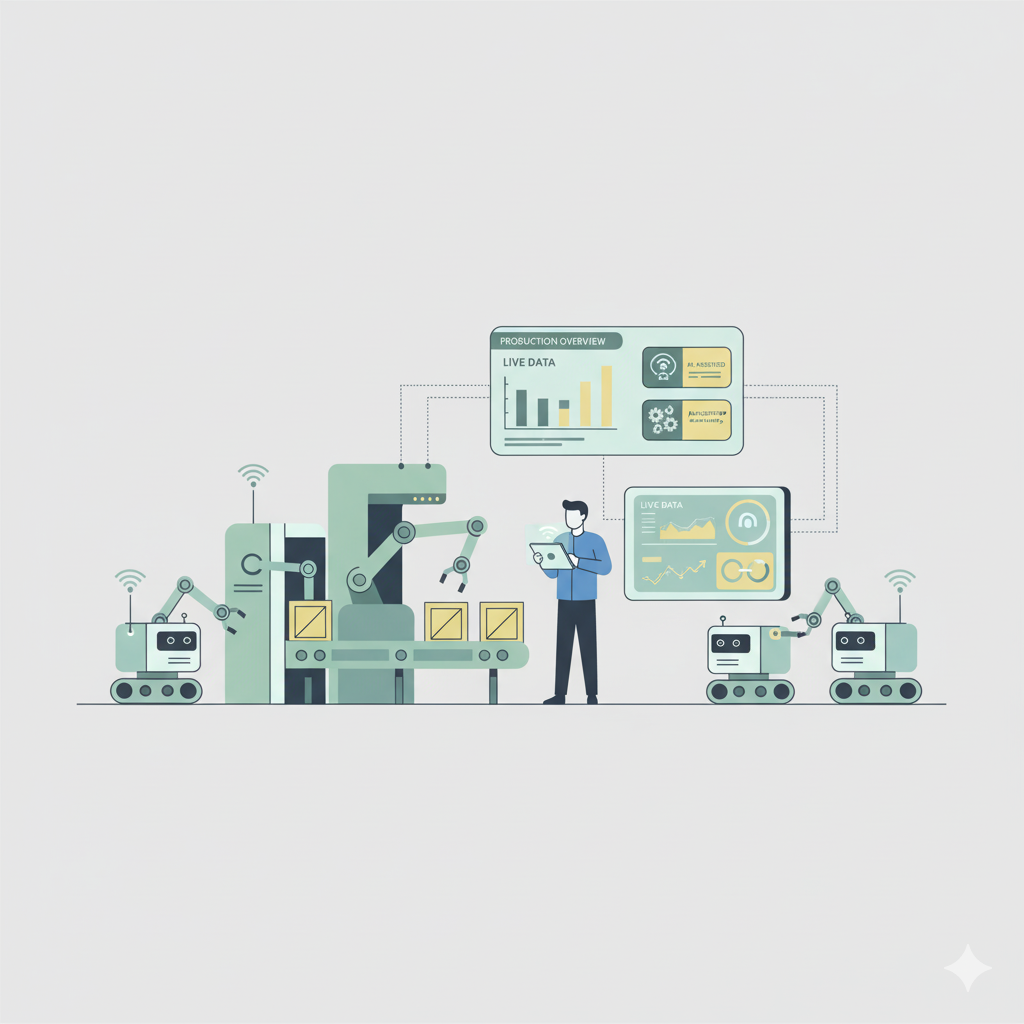
AI-driven robots don’t just follow instructions—they learn patterns, optimize tasks, and adapt to different situations. When you connect them with IoT sensors, they receive real-time data about their surroundings, equipment status, and ongoing processes.
In practical terms, this means:
- Robots can adjust their movements based on live data.
- Machines detect delays before they happen.
- Workflows continuously self-improve without human intervention.
Employees no longer waste time on repetitive or error-prone tasks. Instead, they focus on decision-making, quality control, or more creative work that adds real value.
Real-Life Use Cases: How Workflows Are Becoming Smarter
a) Automated Material Handling
Modern factories use AI-powered robots to move materials with precision. IoT sensors guide them by scanning paths, identifying obstacles, and tracking inventory.
This makes the movement of goods smoother, faster, and much safer. Workers avoid heavy lifting and receive items exactly when needed.
b) Robotics-Assisted Quality Checks
Cameras and sensors attached to robots detect even tiny defects in real-time.
Instead of manual inspection, the robot flags issues instantly—saving hours of human effort and ensuring consistent accuracy.
c) Smart Warehousing and Order Picking
In logistics, IoT-connected robots navigate aisles, locate products, and bring them to employees.
This reduces walking time, minimizes mistakes, and speeds up order fulfillment dramatically—especially for e-commerce companies.
Workforce Benefits Companies Are Actually Seeing
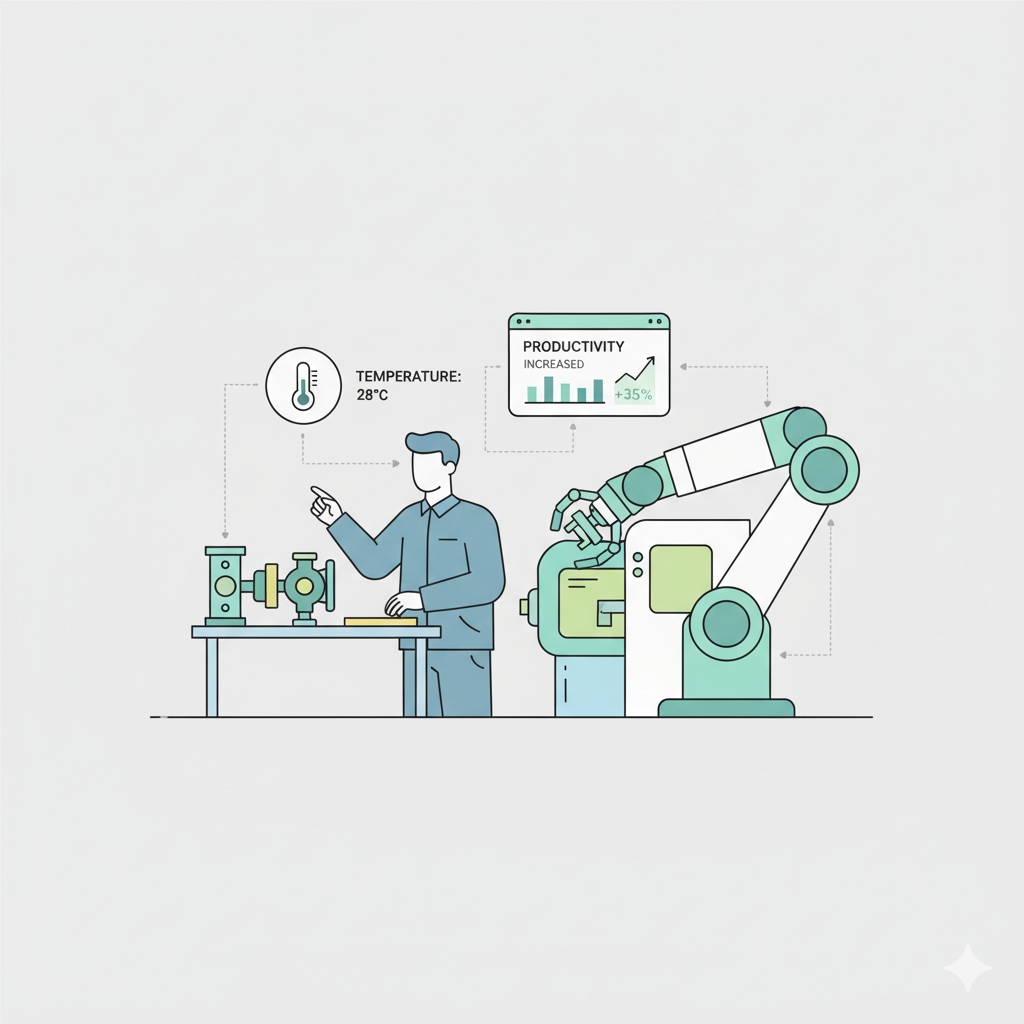
a) Higher Productivity With Less Physical Strain
AI robots take over tiring and repetitive work, letting employees focus on meaningful tasks.
This directly improves output while reducing burnout, which is one of the biggest hidden costs in many industries.
b) Fewer Human Errors, More Consistency
Manual work often results in variation and slip-ups. AI and IoT systems maintain consistent performance 24×7. This improves product quality and significantly reduces rework, which saves both time and money.
c) Faster Decision-Making on the Floor
Since IoT sensors send live data and AI analyzes it instantly, teams don’t have to wait for reports.
They can act immediately, prevent delays, and manage workflows with much more confidence.
d) Improved Worker Safety and Accident Prevention
Machines detect risky conditions—like overheating, misalignments, or unstable loads—before humans notice. This early detection reduces hazards and ensures a safer environment for everyone on the floor.
FAQ’s
1. Will AI-driven robots replace human workers?
Not entirely. Robots usually take over repetitive, dangerous, or physically demanding tasks. Humans still handle creativity, problem-solving, customer interaction, and strategic decision-making. The future is about collaboration, not replacement.
2. How does IoT improve robotic efficiency?
IoT sends live data to robots—such as temperature, location, speed, and machine condition. This helps robots make smarter decisions, avoid errors, and stay aligned with real-world conditions. It makes automation much more adaptive and reliable.
3. Is adopting AI + IoT robotics expensive for companies?
The initial setup can be costly, but the long-term ROI is high. Companies save money through reduced downtime, fewer errors, lower labor strain, and faster workflows. Many businesses recover their investment within 6–18 months.