
Discover how Gen ai and RAG are reshaping modern AI systems. Learn 10 powerful, real-world ways this combination boosts accuracy, trust, and enterprise adoption.
Introduction: Why Gen ai and RAG Matter Right Now
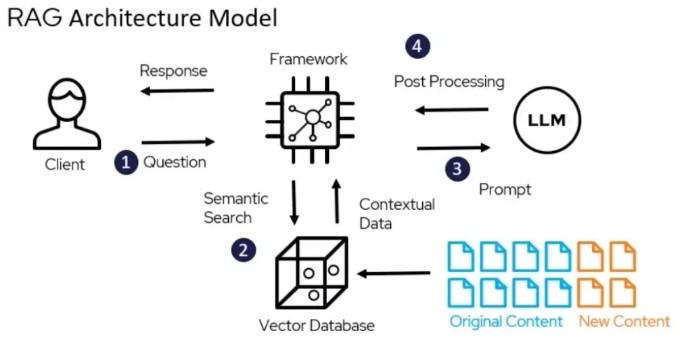
In recent years, artificial intelligence has moved from experimental labs into everyday business operations. At the center of this shift are Gen ai and RAG, a powerful combination that is redefining how AI systems generate, retrieve, and reason over information.
Generative AI (Gen AI) excels at producing human-like text, images, and code. However, it often struggles with accuracy, outdated knowledge, and hallucinations. That’s where Retrieval-Augmented Generation (RAG) comes in. By grounding Gen AI outputs in real, external data sources, RAG dramatically improves reliability and relevance.
Together, Gen ai and RAG are not just incremental improvements—they represent a structural change in how modern AI systems are designed, deployed, and trusted. In this article, we’ll explore 10 powerful ways this combination is transforming AI across industries.
1) Grounding AI Responses in Real-Time Knowledge
Traditional Gen AI models rely on static training data. Once trained, their knowledge becomes outdated. RAG changes this completely.
With Gen ai and RAG, AI systems retrieve fresh information from databases, APIs, documents, or internal knowledge bases before generating responses. This ensures answers are current, relevant, and verifiable especially critical for domains like healthcare, finance, and law.
Key Benefit:
- Reduced hallucinations
- Improved factual accuracy
- Real-time adaptability
2) Improving Trust and Explainability in AI Outputs
One of the biggest barriers to AI adoption is trust. Users often ask, “Where did this answer come from?”
RAG-enabled systems can cite sources, show retrieved documents, or explain reasoning paths. This transparency builds confidence and makes AI outputs easier to audit and validate.
Why it matters:
- Supports compliance and governance
- Increases user confidence
- Enables human-in-the-loop validation
3) Enabling Enterprise-Grade AI Applications
Enterprises need AI that understands proprietary data—not just public internet text.
Gen ai and RAG allow organizations to connect large language models to:
- Internal documents
- Customer records
- Technical manuals
- Knowledge bases
This turns generic AI into a domain-specific expert without retraining the model from scratch.
4) Reducing Training Costs and Model Complexity
Training large models from scratch is expensive, time-consuming, and resource-heavy.
RAG reduces the need for constant fine-tuning by separating knowledge retrieval from language generation. Instead of retraining models whenever data changes, organizations simply update the underlying data sources.
Result:
- Lower infrastructure costs
- Faster iteration cycles
- More scalable AI systems
5) Powering Advanced Question-Answering Systems
Search engines and chatbots are evolving into intelligent assistants.
With Gen ai and RAG, question-answering systems can:
- Understand complex queries
- Retrieve relevant context
- Generate coherent, contextual responses
This approach outperforms traditional keyword-based search by delivering answers, not just links.
6) Enhancing AI Performance in Regulated Industries
In regulated sectors, incorrect AI output can have serious consequences.
RAG ensures that Gen AI responses are grounded in approved, curated data sources, making it suitable for:
- Healthcare diagnostics
- Legal research
- Financial reporting
This controlled retrieval mechanism helps organizations meet regulatory and ethical requirements.
Frequently Asked Questions (FAQs)
1. What is the main purpose of combining Gen ai and RAG?
The goal is to improve accuracy, relevance, and trust by grounding AI-generated responses in real, retrievable data.
2. Does RAG replace fine-tuning in Gen AI models?
Not entirely, but it significantly reduces the need for frequent fine-tuning by externalizing knowledge.
3. Are Gen ai and RAG suitable for small businesses?
Yes. With cloud-based tools and open-source frameworks, even small teams can deploy RAG-powered AI systems.
4. How does RAG reduce AI hallucinations?
By retrieving factual information before generating responses, the model relies less on guesswork.
5. What industries benefit most from Gen ai and RAG?
Healthcare, finance, legal services, education, customer support, and enterprise knowledge management.