
Companies across manufacturing, retail, logistics, healthcare, and even hospitality are using connected sensors, real-time data, and AI-driven decision-making to reduce errors, speed up operations, and run more efficiently. What used to require hours of human effort can now happen automatically in seconds. This shift is not futuristic anymore; it’s happening right now. AIoT is becoming the main engine behind modern, autonomous companies.
From Manual Workflows to Smart, Self-Optimizing Systems
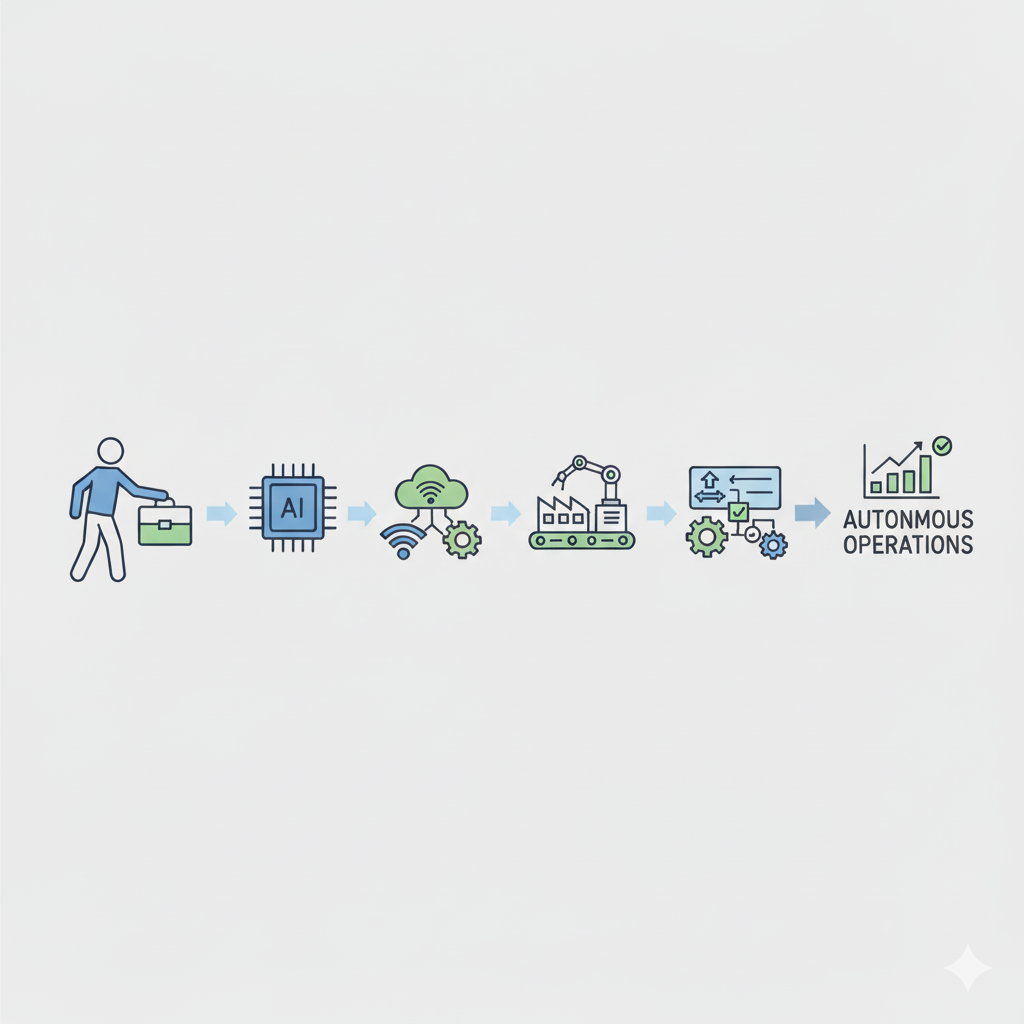
AI + IoT turns ordinary business machines into intelligent systems. Instead of humans monitoring devices or manually checking performance, IoT sensors collect data continuously—while AI analyzes it and makes recommendations or triggers automated actions.
For example, warehouses now use smart conveyors that adjust speeds automatically based on workload. Retail stores use AIoT-driven inventory tracking to reorder products on their own. Factories use machine-learning systems that optimize production lines in real time without human intervention. This shift reduces errors, saves time, and keeps operations stable even during heavy load.
Real-Time Visibility and Faster Decision-Making
One of the biggest advantages of AIoT is that it gives businesses complete visibility. Everything—machines, vehicles, employees, tools, stock—can be tracked in real time.
With AIoT, businesses get:
- Instant alerts when something breaks
- Live dashboards that show operations happening across locations
- Real-time optimization instead of late corrections
- Faster decisions using AI recommendations
This level of visibility eliminates blind spots that cause delays, manual bottlenecks, and unnecessary downtime.
Autonomous Operations: What Companies Are Actually Gaining

Today, many businesses are already using AI + IoT to run key parts of their operations autonomously. Here’s what companies gain:
a) Reduced manual labor
Machines handle repetitive tasks, letting employees focus on skilled work.
b) Lower operational costs
Autonomous systems use energy smarter, reduce wastage, and avoid costly human errors.
c) Zero downtime
Systems self-monitor, self-report, and self-adjust before failures happen.
d) Higher process efficiency
Workflows become faster and more accurate because AI continuously fine-tunes the process.
e) Better scalability
Businesses can expand operations without needing equal increases in manpower.
FAQs
1. How does AI + IoT actually make operations autonomous?
AI + IoT work together by collecting real-time data from sensors and letting AI analyze, predict, and automate decisions. Over time, the system learns patterns and begins to self-correct, manage tasks, and optimize operations with minimal human involvement. This results in smoother, faster, and more reliable processes.
2. Is autonomous operation affordable for small and mid-sized businesses?
Yes. Thanks to cloud platforms, modular IoT devices, and low-cost AI tools, companies don’t need massive budgets anymore. Many SMBs start small—like automating inventory or monitoring machines—and then scale gradually as savings start coming in. The ROI often pays for itself in months, not years.
3. Which industries benefit the most from AI + IoT automation?
Manufacturing, logistics, retail, supply chain, healthcare, and hospitality see the fastest results. However, any business dealing with repetitive tasks, manual tracking, or large operations can benefit. AIoT brings transparency, automation, and efficiency—things every industry needs to stay competitive.