
Unplanned downtime is one of the biggest hidden expenses in any business. When a machine suddenly breaks, production stops, orders get delayed, employees wait around, and the company loses money every minute. Traditionally, businesses fix machines only after they fail or maintain them on a fixed schedule—both of which are inefficient.
But with AI-powered predictive maintenance, companies can now detect issues before they happen. By combining IoT sensors with AI algorithms, businesses get real-time insights into machine health and can predict failures days or even weeks in advance. This shift is saving companies millions globally and transforming how maintenance is done.
How Predictive Maintenance Works
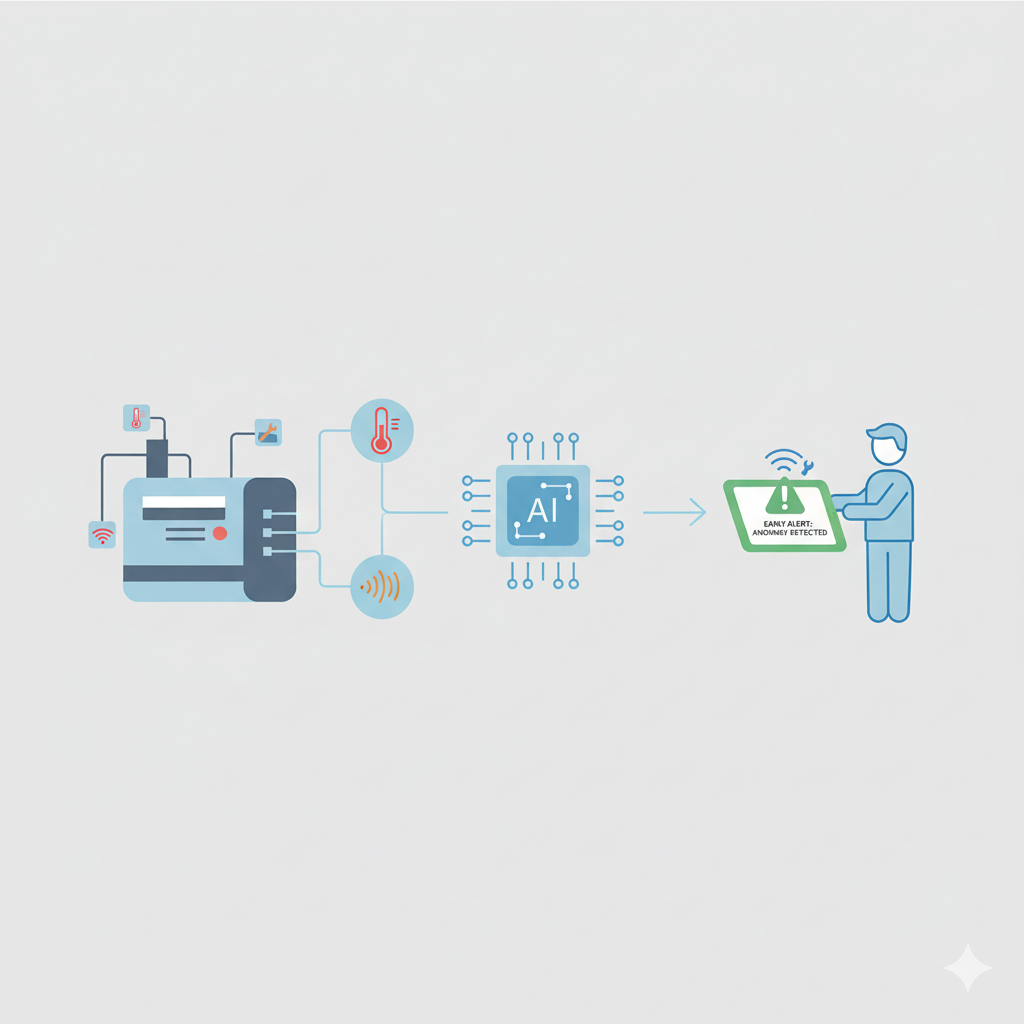
Predictive maintenance uses tiny IoT sensors placed on machines—like motors, pumps, conveyors, or HVAC systems—to track things such as vibration, temperature, pressure, sound, and electrical usage. These sensors send continuous data to AI systems, which analyze patterns and detect anything unusual.
Instead of waiting for a breakdown, the AI warns technicians early:
- “This motor will likely fail in 6–8 days.”
- “This part is overheating; replace it soon.”
- “This machine is using more energy than normal.”
The result? Maintenance becomes proactive instead of reactive, reducing downtime drastically.
Traditional maintenance is expensive because you either:
- Fix machines after they break (costly downtime), or
- Maintain machines too often even when they’re working fine (wasted money).
AI solves this by predicting the exact moment when something will go wrong. This means businesses don’t overspend on unnecessary maintenance and don’t suffer from sudden machine failures. Companies also gain real-time visibility instead of guessing or relying on old schedules.
What are the business benifits?
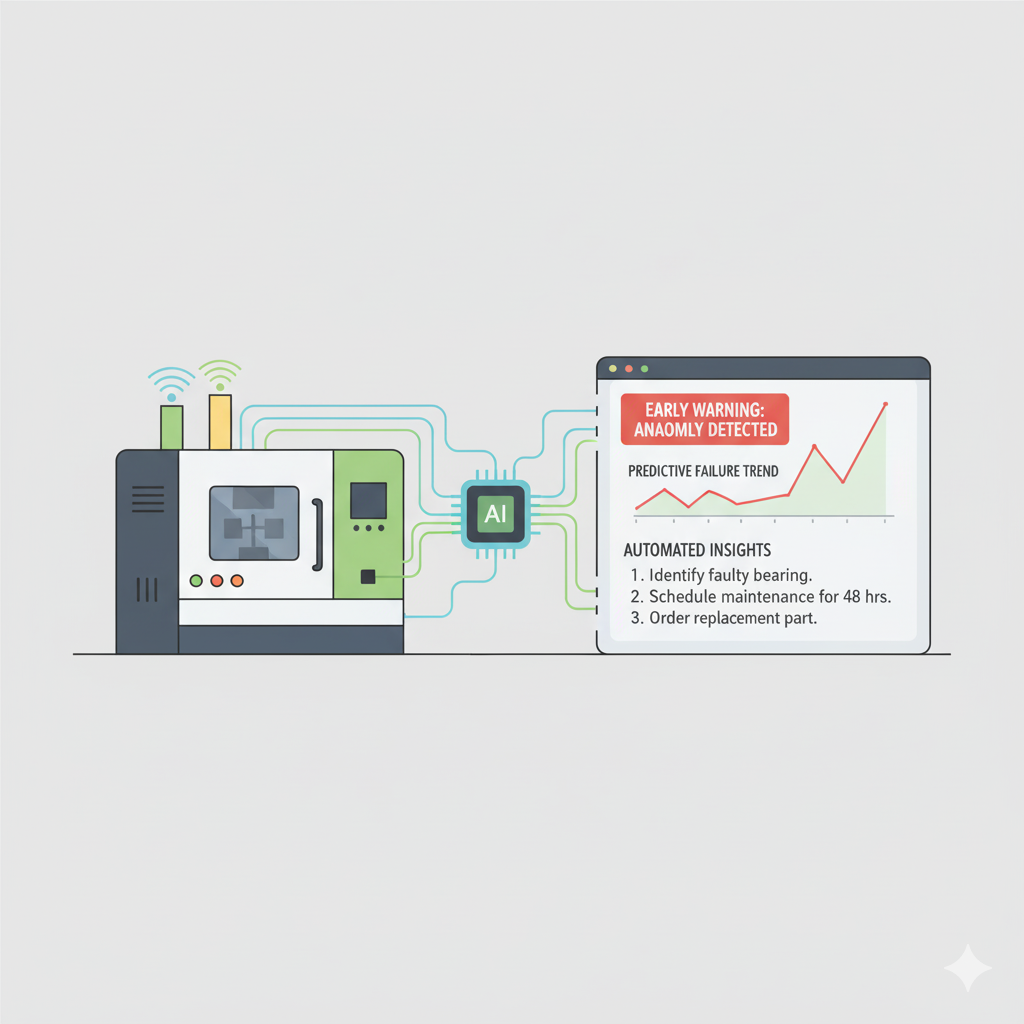
a) Up to 50% reduction in unplanned downtime
Predictive maintenance helps companies identify issues before they turn into breakdowns, allowing teams to act early. This leads to significantly fewer production stoppages and smoother day-to-day operations. Many companies report up to a 50% drop in unexpected machine failures.
b) Lower repair and replacement costs
When a machine fails suddenly, the damage is usually bigger and more expensive. AI helps catch small problems early—like unusual vibration or heat—so the fix is cheaper and quicker. This reduces both maintenance expenses and emergency repair costs.
c) Longer machine lifespan
Machines that are monitored and maintained at the right time naturally last much longer. AI ensures each part is serviced only when needed, preventing overuse or neglect. This increases the overall lifespan of equipment, saving companies huge capital expenses in the long run.
d) Higher safety and fewer accidents
Faulty machines are one of the biggest causes of workplace accidents. Predictive maintenance detects risks like overheating, leaks, or mechanical stress early, reducing safety hazards. This creates a safer environment for employees and minimizes operational risks.
e) Better planning and scheduling
Instead of guessing when a machine might fail, maintenance teams get accurate predictions and alerts. This helps them plan repairs during low-usage hours and avoid disruptions. As a result, workflows become more efficient, and resource management improves.
FAQ’s
1. Is predictive maintenance only for large manufacturing companies?
Not at all. Small and mid-sized businesses can also benefit because IoT sensors have become affordable. Even a small workshop, warehouse, or factory can save significant money by avoiding surprise breakdowns. Many SMBs start with just a few machines and expand once they see the ROI.
2. How accurate are AI predictions for machine failures?
AI systems learn from thousands of data points collected in real-time. Over time, they become extremely accurate at spotting early signs of failure—often predicting issues days before humans can notice anything. Accuracy keeps improving as the system gathers more data from the machines.
3. Is it difficult to integrate AI-powered predictive maintenance into existing operations?
No. Modern AIoT systems are designed to plug into existing machines using simple sensor attachments. Businesses don’t need to upgrade their entire setup. Most companies can start implementing predictive maintenance in under a week, depending on the number of machines.